Neighbourhood in Buitenveldert-West
Gelderlandpleinbuurt
Architect Dirk Sterenberg designed the bridge while working for the Department of Public Works. Wikipedia (translated from Dutch)
Ride Gelderlandpleinbuurt13 facts · 27 name stories


In the game
Frames from a ride through Gelderlandpleinbuurt.
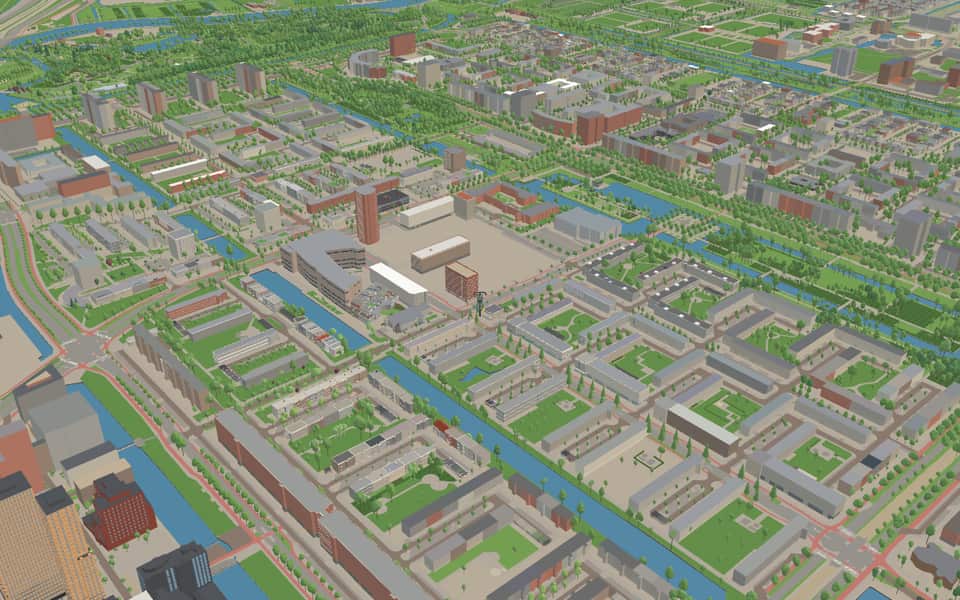
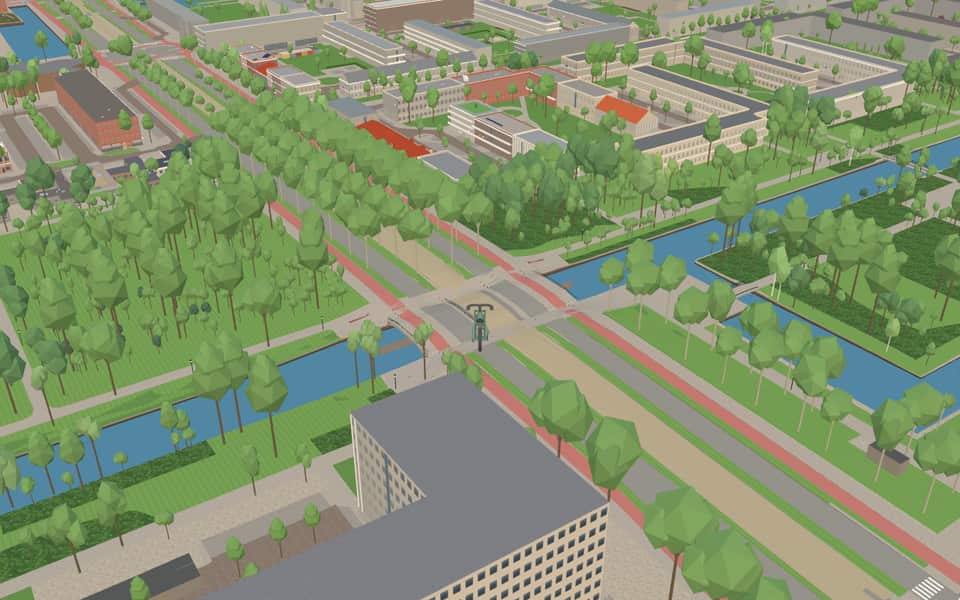
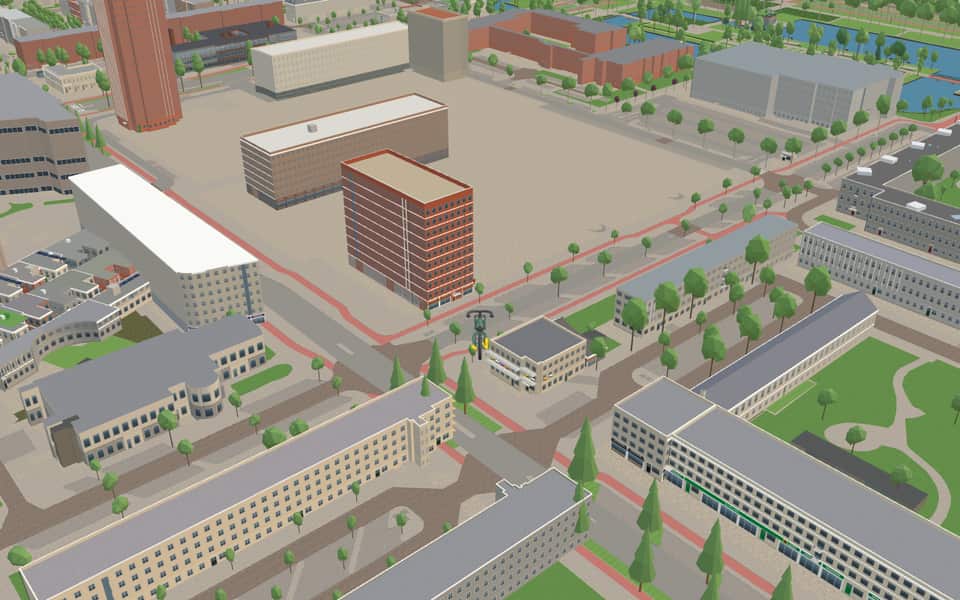
6 more photos of Gelderlandpleinbuurt


Built here
Buildings modelled one by one for the ride.
Nothing here is individually modelled yet: the ride draws Gelderlandpleinbuurt from the city's 3D building register (3DBAG), with real heights and roofs.
Did you know
Trivia the ride can show you here.
- In 1989–90 a tram line was laid down the middle of the Gwijde van Henegouwenbrug, built strong enough for a metro. Wikipedia (translated from Dutch)
- Gwijde van HenegouwenbrugA tram line was installed in the center of the bridge between 1989 and 1990. nl.wikipedia.org
- BuitenveldertselaanConstruction occurred during the 1960s along the Parnassusweg near a former dike body. nl.wikipedia.org
- BuitenveldertselaanZuidas development shortened the street's northern end in 2015 to start south of De Boelelaan. nl.wikipedia.org
- BuitenveldertselaanCrossing the municipal boundary near Kalfjeslaan, the road continues as Beneluxbaan in Amstelveen. nl.wikipedia.org
- BuitenveldertselaanArchitects Zeeger Gulden and Ger Husslage created the buildings at house numbers 78 through 84. nl.wikipedia.org
- De BoelelaanThe road gained importance after the VU medical center arrived on its south side in 1957 or 1958. nl.wikipedia.org
- De BoelelaanGarden town Buitenveldert was constructed along the southern stretch during the 1960s. nl.wikipedia.org
- De BoelelaanA connection called Lex van Deldenbrug linked De Boelelaan to George Gershwinplein between 2012 and 2013. nl.wikipedia.org
- De BoelelaanThe tower at number 2 opened as the Esso Motor Hotel in 1969 before becoming a refugee shelter in 2022. nl.wikipedia.org
- ParnassuswegIn the 1950s, the road was extended toward Buitenveldert to reach the A10 ring road. nl.wikipedia.org
- ParnassuswegSince 1972, the road has been raised to create a highway-like appearance with lower paths for cyclists and pedestrians. nl.wikipedia.org
- ParnassuswegTram line 5 began operating on the southern section of the street in 2008. nl.wikipedia.org
Names on the map
Where the canal, bridge and street names come from.
Bridges
- Gwijde van HenegouwenbrugAlso Guy of Avesnes, or Gui d'Avesnes (1253-1317), Bishop of Utrecht. He personally administered the possessions of the Lords of Amstel. Just before his consecration in Utrecht, in 1300 or 1301, he granted Amsterdam its town rights.
Streets
- Arent Janszoon ErnststraatArent Janszoon Ernst van Bassen, bailiff of Amstelland from 1569 to 1573.
- AsingaborgSeventeenth-century castle near Middelstum (Groningen), restored in 1926.
- BeethovenstraatLudwig van Beethoven (1770-1827), German composer and grand master of instrumental music. His works include 9 symphonies, 32 piano sonatas, 11 overtures and 17 string quartets.
- BuitenveldertselaanNamed after the Binnendijksche Buitenveldersche polder, originally a landscape of meadows and market gardens.
- Crack-StateAn imposing state (a Frisian manor house) in Heerenveen (Friesland), probably built in 1608 by Hypolitus Crack.
- De BoelelaanGerrit de Boele, bailiff of Amstelland and Waterland (1354/55).
- DoddendaalA castle near Ewijk (Gelderland), probably founded in the eleventh or twelfth century. The name Doddendaal dates from 1379. The building has been altered many times. In the seventeenth and eighteenth centuries its cellar served as a church for Roman Catholics.
- EnnemaborgA late-medieval Groningen borg (fortified manor) near Midwolde (Groningen), restored around 1700. In its present form a stately country house.
- FrieslandstraatThe province. Several nearby streets are named after Frisian castles.
- Gijsbrecht van IJselsteinstraatBailiff of Amstelland and Waterland from 1358 to 1361.
- GroningenstraatThe province. The adjoining streets are named after Groningen castles (borgen).
- Heringa-StateA castle in Marssum near Leeuwarden, also called Poptaslot, built in the sixteenth century and restored in 1908.
14 more streets with a story
- HogewerfA former ridderhofstad (knightly manor), now a farm, near Oud-Beijerland, named after its former owner, Lord Hubrecht Hoogewerff.
- KiefskampOne of the best-preserved eighteenth-century country houses, from about 1770, near Vorden (Gelderland).
- LoevesteinAn old castle where the Maas and the Waal meet, at Poederoijen (Gelderland), founded by Dirc Loef. It was never lived in by a noble family. In the seventeenth century it was a prison that held many well-known figures, among them Hugo de Groot, and the castle was nicknamed the Dutch Tower (of London).
- LoowaardA manor (havezate) near Duiven (Gelderland), dating from about 1550.
- OnsteinA moated country house from 1711 near Vorden (Gelderland).
- ParnassuswegA mountain in Greece, in Greek mythology the home of Apollo and the Muses. Today used figuratively for the realm of poetry.
- SchierstinsA fourteenth-century defensible tower house at Veenwouden (Friesland), restored in 1962. Before 1439 it came into the possession of the grey (schiere) monks of Klaarkamp Abbey.
- SlangenburgA fifteenth-century castle near Doetinchem, rebuilt in the seventeenth century under General Van Baer van Slangenburg.
- ValkhofThe Valkhof, by the Waal bridge in Nijmegen, was originally founded around 800 by Charlemagne. The castle was rebuilt in 1155 by Emperor Frederick Barbarossa and demolished in 1797, apart from the surviving Carolingian chapel and some remains of walls.
- Van LeijenberghlaanArent van Leyenbergh, bailiff of Amstelland and Waterland around 1400.
- WedderborgThe borg (fortified house) at Wedde (Groningen), originally built in 1362 and rebuilt in 1530 for Charles of Guelders. The remains of the old walls were uncovered in 1957.
- WijenburgA sixteenth-century manor house at Echteld (Gelderland) with a late-medieval tower, altered inside in the eighteenth century and now restored, named after the lords of Wije, lords of Echteld.
- WildenborchA fortified castle of 1372, of which only a heavy gate tower remains, now the central part of the present building of 1782, near Vorden (Gelderland).
- Willem van WeldammelaanBailiff of Amstelland and Waterland from 1392 to 1395.