Quarter · Amsterdam
De Pijp
De Pijp (English: The Pipe) is a neighbourhood of Amsterdam, Netherlands. It is located directly south of Amsterdam's city centre and it is part of the borough Amsterdam-Zuid, in a part of the city known as the Old South (Oud Zuid). It is served by De Pijp metro station. Most streets in De Pijp are named after Dutch painters, like Jan Steen, Frans Hals, Ruysdael and Vincent van Gogh. en.wikipedia.org
The name. De Pijp means "The Pipe" in English and the origin of the name is not well documented, but it is likely a reference to the long, narrow streets that funneled people towards central Amsterdam. en.wikipedia.org


In the game
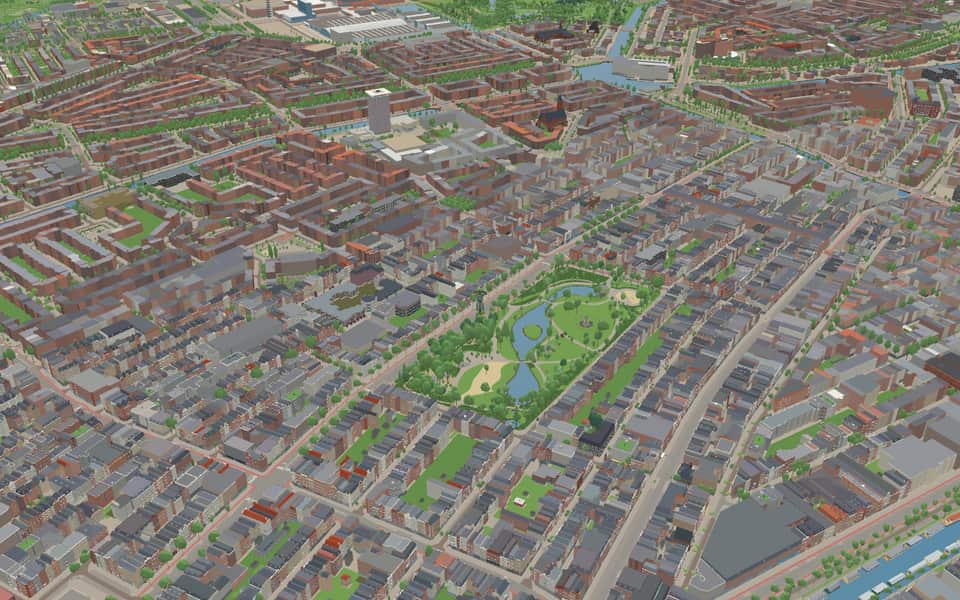
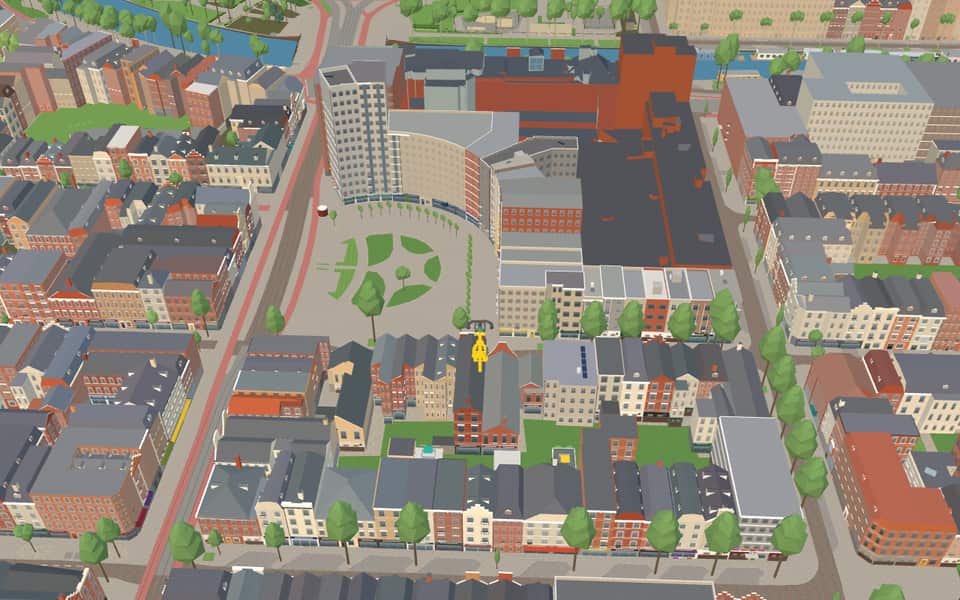
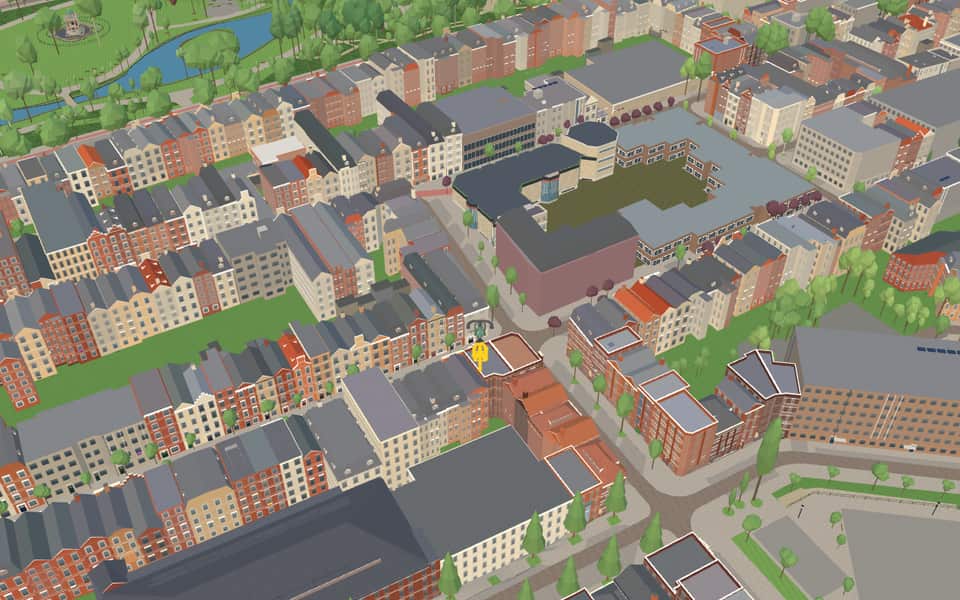
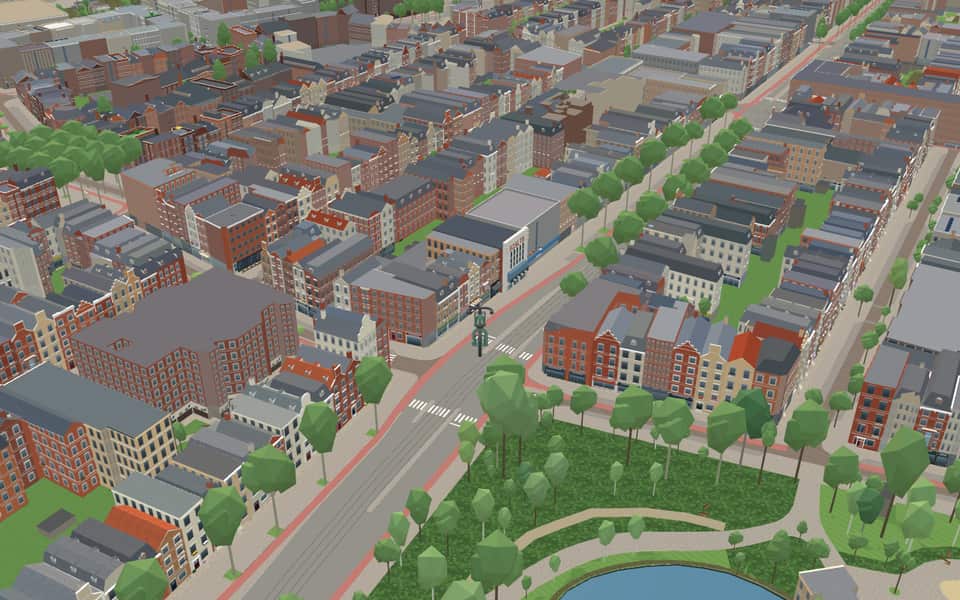
Frames from a ride through De Pijp.
6 more photos of De Pijp


Built here
Buildings modelled one by one for the ride.
Heineken Experience
Afrikahuis
Rialto
- No picture yet
Gerard Dou Synagogue
- No picture yet
Museum De Dageraad

- No picture yet
Vredeskerk
- No picture yet
Buurtgebouw Henrick de Keijser, Henrick de Keijserplein 45
- No picture yet
De Ateliers (former Quellinusschool), Stadhouderskade 86
- No picture yet
Diamantslijperij Asscher
- No picture yet
Former Openbare Muziekschool, Eerste Jacob van Campenstraat 59
- No picture yet
Heinekenplein block (Stadhouderskade 79)
- No picture yet
Hotel Okura Amsterdam
- No picture yet
Oranjekerk, Van Ostadestraat
- No picture yet
Tolstraat 160 (former theosophical temple, Cinétol)
- No picture yet
Albert Cuypstraat 156E to 142B (8 houses)
- No picture yet
Eerste Jacob van Campenstraat 12 to 6 (4 houses)
- No picture yet
Van Woustraat 70 to 64 (4 houses)
- No picture yet
Albert Cuypstraat 124 to 122A (3 houses)
- No picture yet
Albert Cuypstraat 210 to 206 (3 houses)
- No picture yet
Eerste Jan Steenstraat 94 to 90 (3 houses)
- No picture yet
Eerste Van der Helststraat 45 to 49 (3 houses)
- No picture yet
Gerard Doustraat 168 to 164 (3 houses)
- No picture yet
Gerard Doustraat 234 to 230 (3 houses)

20 more modelled buildings
- Ruysdaelkade 81 to 85 (3 houses) Surveyed street front
- Van Woustraat 20 to 16 (3 houses) Surveyed street front
- Van Woustraat 46 to 42A (3 houses) Surveyed street front
- Albert Cuypstraat 162 to 160 (2 houses) Surveyed street front
- Albert Cuypstraat 82 to 80 (2 houses) Surveyed street front
- Eerste Jacob van Campenstraat 37 to 39 (2 houses) Surveyed street front
- Eerste Van der Helststraat 51 to 53 (2 houses) Surveyed street front
- Eerste Van der Helststraat 62A to 62 (2 houses) Surveyed street front
- Eerste Van der Helststraat 68 to 66 (2 houses) Surveyed street front
- Ferdinand Bolstraat 14 to 12 (2 houses) Surveyed street front
- Ferdinand Bolstraat 26 to 24 (2 houses) Surveyed street front
- Saenredamstraat 66 to 64 (2 houses) Surveyed street front
- Tweede Jan van der Heijdenstraat 4 to 2 (2 houses) Surveyed street front
- Van Woustraat 36 to 34 (2 houses) Surveyed street front
- Van Woustraat 58 to 56 (2 houses) Surveyed street front
- Van Woustraat 92 to 90 (2 houses) Surveyed street front
- Berlage Lyceum, Pieter Lodewijk Takstraat 33, Amsterdam (1924 Amsterdam School school in yellow brick) Modelled building
- Heinekenplein block, Amsterdam (De Pijp) Modelled building
- Montessori Lyceum Amsterdam, Van Ostadestraat 103, Amsterdam (1900 school Modelled building
- Quellijnstraat 36, Amsterdam-Zuid (Weteringbuurt / Quellijnkwartier) Modelled building
Did you know
Trivia the ride can show you here.
- A neighbourhood south of the centre, with roots in Amsterdam’s 19th-century expansion. Wikipedia
- The Albert Cuyp Market is one of its best-known meeting places. Wikipedia (translated from Dutch)
- Van Niftrik’s original 1866 plan imagined a grand new urban centre here. Wikipedia
- The Albert Cuypmarkt on the Albert Cuypstraat is the largest daily market in the Netherlands, held Monday to Saturday. Wikipedia (translated from Dutch)
- AfrikahuisThe new church replaced a demolished predecessor and held only 900 seats instead of the original 2000. nl.wikipedia.org
- AfrikahuisFrench limestone facades sit atop a concrete base while the roof floats freely above them. nl.wikipedia.org
- AfrikahuisGlass building block strips were originally set into the concrete base before being sealed with steel grilles. nl.wikipedia.org
- De AteliersStudents are not called students but are officially referred to as participants. en.wikipedia.org
- Heineken ExperienceA larger modern facility replaced it on the city outskirts in 1988. en.wikipedia.org
- Heineken ExperienceTours of the original brewery began before the visitor centre officially opened in 1991. en.wikipedia.org
- Museum De DageraadArchitects Michel de Klerk and Piet Kramer built the complex in 1920. nl.wikipedia.org
- Museum De DageraadThe house blocks follow the original layout of a planned hospital complex. nl.wikipedia.org
- RialtoFilm enthusiast Anton Pieter du Mée commissioned the building's creation in 1920. en.wikipedia.org
- RialtoArchitect Jan van Schaik designed the structure that now houses this cinema. en.wikipedia.org
24 more facts
- RialtoThe Stichting Amsterdams Filmhuis has operated the theatre since 1982. en.wikipedia.org
- SarphatimonumentThe round stone structure stands 12 meters high and is surrounded by a water basin with a diameter of 16 meters. nl.wikipedia.org
- SarphatimonumentDuring World War II the park was renamed Bollandpark and the bust was removed before being restored in 1945. nl.wikipedia.org
- Van BuurenmonumentThe globe rests on a compass rose, a motif recurring in architect Piet Kramer's work. nl.wikipedia.org
- VredeskerkVredeskerk (Peace Church) was initially called the Stable of Bethlehem to mark its December 25, 1918 dedication. nl.wikipedia.org
- Albert Cuyp-marktThe market honors Albert Cuyp, a painter from the 17th century. en.wikipedia.org
- Albert Cuyp-marktCity officials formalized the chaotic stalls into an official market in 1905. en.wikipedia.org
- Carel WillinkplantsoenCarel Willinkplantsoen received its official name only in 1999. nl.wikipedia.org
- Carel WillinkplantsoenStadhouderskade makes a strange turn here to cross the Boerenwetering canal. nl.wikipedia.org
- Carel WillinkplantsoenMayor Schelto Patijn unveiled the statue on March 3, 2000. nl.wikipedia.org
- SarphatiparkPainter Mommie Schwarz lived nearby until his deportation and execution at Auschwitz in 1942. en.wikipedia.org
- Han van ZomerenbrugIn 2009, the bridge was renamed Han van Zomerenbrug after a graphic artist and WWII resistance fighter. nl.wikipedia.org
- Han van ZomerenbrugA man once tried to push a woman into the water through the railing on this bridge in 1928. nl.wikipedia.org
- Han van ZomerenbrugResidents largely financed the original footbridge built here in 1927 to connect new southern housing. nl.wikipedia.org
- LiefdesbruggetjeLiefdesbruggetje means "Little Love Bridge" and earned its name as a popular spot for wedding photos. nl.wikipedia.org
- LiefdesbruggetjeEngineer Jacobus van Niftrik designed the original rustic bridge in 1884. nl.wikipedia.org
- Ferdinand BolstraatFEBO, a famous Dutch fast-food chain, takes its name directly from Ferdinand Bolstraat. en.wikipedia.org
- Ferdinand BolstraatThe FEBO chain began in 1941 as a bakery named Maison FEBO. en.wikipedia.org
- Ferdinand BolstraatAlthough named after the street, the original Maison FEBO bakery was never actually located on Ferdinand Bolstraat. en.wikipedia.org
- Ferdinand BolstraatA bridge replaced a ferry over the Singelgracht canal in 1875, connecting the street to the city centre. en.wikipedia.org
- StadhouderskadeStadhouderskade was named in 1872 to honor stadholders William II and William III. nl.wikipedia.org
- StadhouderskadeA rainwater retention basin sits beneath the street near the Rijksmuseum. nl.wikipedia.org
- StadhouderskadeStadhouderskade 55 once housed a chapel, then the Van Nispenhuis which burned down before becoming the Willemshuis. nl.wikipedia.org
- StadhouderskadeA double symmetrical townhouse on Stadhouderskade may have been the home of pediatrician Sybren Schippers. nl.wikipedia.org
Names on the map
Where the canal, bridge and street names come from.
Canals and water
1 other canal without a recorded story
De Kom
Bridges
- Han van ZomerenbrugHan van Zomeren (1920-1941) was a graphic artist active in the resistance during the German occupation. He printed pamphlets calling for resistance. He was executed by firing squad on the Laren heath in 1941 and reburied in the Field of Honour in Overveen in 1952.Bridge 402: a steel bridge for pedestrians, dated 2009 in the city's bridge register.
- LiefdesbruggetjeThis bridge is called the Liefdesbruggetje (little bridge of love) because it is a favourite spot for wedding photos. From here you can look out over the park and the pond without seeing any buildings.Bridge 172: a steel bridge for pedestrians, dated 1921 in the city's bridge register.
Streets
- Albert CuypstraatLandscape and portrait painter (1620-1691). The street was laid out after the Zaagmolensloot was filled in. Until the second half of the nineteenth century, a number of timber sawmills stood here. In 2005 the Albert Cuypmarkt, which is held in this street, marked its hundredth anniversary.
- AmsteldijkA canal dug around 1920 as part of Berlage's Plan Zuid. It connects the river of the same name with a five-way junction of canals, including the Boerenwetering, the Noorder Amstelkanaal and the Zuider Amstelkanaal.
- AvercampstraatHendrik Avercamp (1585-1634), painter, mainly of winter scenes. Avercamp, who lived in Kampen from 1613, was born deaf and mute and was therefore nicknamed 'de stomme van Kampen' (the mute of Kampen).
- Burgemeester TellegenstraatJan Willem Cornelis Tellegen (1859-1921), structural engineer. Burgomaster of Amsterdam from 1915 to 1921; before that, director of the Building and Housing Inspectorate.
- CarillonstraatA carillon (klokkenspel) consisting of a number of cast bells.
- CeintuurbaanAt the end of the nineteenth century a ring road (ceintuurweg, or belt) was laid around a large part of the city. The stretch between the Boerenwetering and the Amstel was later named Ceintuurbaan. The other stretches later got other names, because a section in between was not yet part of Amsterdam at the time.
- CoöperatiehofThe form of cooperation (coöperatie) through which the housing in this district was built after the First World War.
- Cornelis SpringerstraatPainter (1817-1891) of townscapes, among them Haarlem and Den Briel.
- Cornelis TroostpleinPastel and genre painter (1697-1750). He became known for his group portrait 'Inspectors of the Collegium Medicum'.
- Cornelis TrooststraatPastel and genre painter (1697-1750). He became known for his group portrait 'Inspectors of the Collegium Medicum'.
- CullinanpleinThe Cullinan is the largest South African diamond.
- Daniël StalpertstraatDaniël Stalpaert (1615-1684), architect and draughtsman. He completed the city hall on the Dam designed by Jacob van Campen. As city architect he also designed, among others, the Admiralty building on Kattenburg (now the Maritime Museum), the Oosterkerk, the church on the Amstelveld, the synagogue on the corner of the Nieuwe Amstelstraat and the Huiszittenweduwenhof. As a surveyor he made a map of Amsterdam's fourth expansion.
80 more streets with a story
- David BlesstraatPainter and etcher (1821-1899), mainly of little scenes from domestic life.
- DiamantstraatThe hardest and most precious gemstone. Why this and other gemstones were used for names in the neighbourhood cannot be traced. It may be assumed that it was because of Asscher's diamond-cutting works, based in the Tolstraat since 1907. The street came over from the municipality of Nieuwer-Amstel under the name Eerste De Ruyterdwarsstraat (council decision of Nieuwer-Amstel, 30 September 1890).
- Dora TamanapleinSouth African resistance fighter (1901-1983), very active in the women's movement. A member of the women's wing of the African National Congress (ANC) and one of the leading figures of the Federation of South African Women.
- DusartstraatCornelis Dusart (1660-1704), painter and engraver, a pupil of Van Ostade.
- Eerste Jacob van CampenstraatArchitect (1595-1659), designer of the city hall on the Dam, now the Royal Palace, though he was not allowed to finish the work. Van Campen also built the Heiligewegspoort in 1636, and a palace in Rijswijk for Prince Frederik Hendrik in 1657. The split into Eerste and Tweede came after the stretch of street between them was sold to the Heineken brewery in 1930.
- Eerste Jan SteenstraatPainter (1626-1679), mostly of domestic scenes: merry, untidy interiors. That gave rise to the expression 'a Jan Steen household' (een huishouden van Jan Steen).
- Eerste Jan van der HeijdenstraatPainter and engineer (1637-1712), inventor of the fire engine with a hose and of a new model of street lamp. Painter of portraits and townscapes.
- Eerste SweelinckstraatJan Pieterszoon Sweelinck (1562-1621), a musician of great renown and organist of the Oude Kerk. He wrote many compositions on the psalms and love songs. Before 1896 part of the Tweede Sweelinckstraat lay in the municipality of Nieuwer-Amstel as the Tweede Hoedemakersdwarsstraat (council decision of Nieuwer-Amstel, 22 August 1890).
- Eerste Van der HelststraatBartholomeus van der Helst (1612-1670), painter of militia and regents' group portraits.
- Ernst Cahn en Alfred KohnbrugErnst Cahn, the man with whom Alfred Kohn (died 1941) ran the Koco ice-cream parlours, the home base of Jewish fighting squads in the Second World War.
- Ferdinand BolstraatPainter (1616-1680), a pupil of Rembrandt, who painted portraits and regents' group portraits, among other things. (The boundary with the Gerard Doustraat was set more precisely by council decision of 9 June 1921.)
- Frans HalsstraatPainter (1580-1666) of portraits and militia group portraits.
- Gerard DoupleinPainter (1613-1675), a representative of the Leiden school, a pupil of Rembrandt and teacher of, among others, Metsu and Van Mieris.
- Gerard DoustraatPainter (1613-1675), a representative of the Leiden school, a pupil of Rembrandt and teacher of, among others, Metsu and Van Mieris.
- Gerard RevebrugGerard Kornelis van het Reve (1923-2006), writer and poet. With Harry Mulisch (1927-2010) and Willem Frederik Hermans (1921-1995) he formed the Big Three of post-war literature. His works include 'De avonden' (the evenings, 1947), 'Werther Nieland' (1949) and 'Nader tot U' (nearer to thee, 1966). He received the P.C. Hooft Prize (1968) and the Prize for Dutch Literature (2001).
- Govert FlinckstraatPainter (1615-1660), a pupil of Rembrandt, known above all for his militia group portraits and portraits.
- GranaatstraatA semi-precious stone (garnet).
- HemonylaanThe brothers Frans Hemony (1609-1667) and Pieter Hemony (1619-1680), bell founders of the carillons in the Oude Kerk, the Zuiderkerk, the Westerkerk and the Munttoren.
- HemonystraatThe brothers Frans Hemony (1609-1667) and Pieter Hemony (1619-1680), bell founders of the carillons in the Oude Kerk, the Zuiderkerk, the Westerkerk and the Munttoren.
- Henrick de KeijserpleinCity architect and sculptor (1565-1621). In Amsterdam he built the first Exchange, the Westerkerk, Zuiderkerk and Noorderkerk, and the Montelbaanstoren and Munttoren. In Delft his work includes the tomb of William of Orange.
- Henrick de KeijserstraatCity architect and sculptor (1565-1621). In Amsterdam he built the first Exchange, the Westerkerk, Zuiderkerk and Noorderkerk, and the Montelbaanstoren and Munttoren. In Delft his work includes the tomb of William of Orange.
- Henriëtte RonnerpleinHenriëtte Ronner, née Knip (1821-1909), painter, mainly of dogs and cats.
- Henriëtte RonnerstraatHenriëtte Ronner, née Knip (1821-1909), painter, mainly of dogs and cats.
- Hercules SeghersstraatHercules Pieterszoon Seghers (1589-1638), etcher and landscape painter. Seghers's influence can be seen in the works of Rembrandt and Ruisdael. Only in the twentieth century did his manner of painting come to be highly valued.
- Jan LievensstraatPainter (1607-1674), a pupil of Rembrandt. His work includes murals in the city hall on the Dam.
- Jozef IsraëlskadePainter (1824-1911), a pupil of J.W. Pieneman and J.H. Kruseman, who became known for his socially engaged scenes, among them scenes from the lives of poor fishermen.
- Karel du JardinstraatPainter of landscapes and animals (1622-1678).
- Korte TolstraatAfter the toll gate (tol) on the corner of today's Tolstraat and the Amsteldijk. The toll was levied from about 1780 until the area was annexed in 1896, for the upkeep of the Amsteldijk from this point to Ouderkerk. Before the annexation the street was called Verversstraat (council decision of Nieuwer-Amstel, 11 February 1886).
- KuipersstraatNamed after the former Kuiperspad, which already existed in the seventeenth century and on which the street was laid out. Until 1896 the street belonged, under the same name, to the municipality of Nieuwer-Amstel.
- Lizzy AnsinghstraatMaria Elisabeth Georgine (Lizzy) Ansingh (1875-1959), painter, known above all for her scenes with dolls. She was one of the 'Amsterdamse Joffers' (Amsterdam young ladies).
- LutmastraatJanus Lutma (1588-1669), gold- and silversmith. Part of this street came over in 1896 from the municipality of Nieuwer-Amstel as the Ruyterstraat (council decision of Nieuwer-Amstel, 30 September 1890), while another part was called Lutmaplein until 1924 (council decision of 6 June 1917).
- Marie HeinekenpleinPainter (1844-1930), mainly of flowers and still lifes, who held several exhibitions in Amsterdam between 1883 and 1899. She was a member of the Amsterdam artists' society 'Arti et Amicitiae'.
- MauvestraatAnton Mauve (1838-1888), landscape painter.
- MesdagstraatHendrik Mesdag (1831-1915), painter of seascapes.
- Nicolaas BerchemstraatPainter (1620-1683), mainly of landscapes.
- Nieuwe AmstelbrugWhen this double bascule bridge, designed partly by Berlage, was completed in 1903, it was the newest bridge over the Amstel. The Hoge Sluis was also called the Amstelbrug, but this bridge was newer, hence the Nieuwe (new) Amstelbrug.
- OosteindeThe name refers to its position relative to the Utrechtsepoort (Utrecht gate), which stood in the middle of the Frederiksplein, where the Paleis voor Volksvlijt was later built. The street ran along the east side at the end of the city (outside the gate, inside the city moat). The street on the other side was then named Westeinde.
- PaletstraatA painter's tool: the little board on which the painter mixes colours (the palette).
- PastelstraatA colour crayon (pastel); the name is also given to the finished work, the crayon drawing.
- PenseelstraatA painting and drawing tool, a thin brush.
- PienemanstraatNicolaas Pieneman (1810-1860), history and portrait painter, who succeeded his father J.W. Pieneman as chairman of the society of artists and art lovers 'Maatschappij Arti et Amicitiae', founded in 1839.
- Pieter AertszstraatPainter (1508-1575) of genre pieces and church interiors. Before 1919 the street was called Nieuwe Tolstraat.
- Pieter Lodewijk TakstraatJournalist and politician (1848-1907), one of the leaders of the SDAP and editor-in-chief of Het Volk. He was one of the founders of the general workers' cooperative De Dageraad.
- PijnackerstraatAdam Pijnacker (1622-1673), painter, especially of landscapes.
- PoggenbeekstraatGeorg Jan Poggenbeek (1853-1903), painter, mainly of landscapes.
- QuellijnstraatArtus Quellijn or Quellinus (1609-1668), Southern Netherlandish sculptor, whose works include the sculpture for the city hall on the Dam.
- RobijnstraatA hard, red gemstone (ruby).
- RustenburgerdwarsstraatThe street was laid out in 1878 on the Rustenburgerpad, which recalls the former country estate Rustenburg, from 1620.
- RustenburgerstraatThe street was laid out in 1878 on the Rustenburgerpad, which recalls the former country estate Rustenburg, from 1620.
- RuysdaelkadeA seventeenth-century family of painters and engravers, the best known of whom was Jacob Isaacksz. van Ruisdael (1628-1682), landscape painter and teacher of Hobbema. The street already existed under this name in the municipality of Nieuwer-Amstel before 1888.
- SaenredamstraatPieter Jansz. Saenredam (1597-1665), painter, whose works include 'Interior of the St Bavo Church' and 'The Old City Hall on the Dam'.
- SaffierstraatA hard blue gemstone (sapphire).
- SarphatiparkSamuel Sarphati (1813-1866), Amsterdam doctor and pharmacist with many connections in banking circles, who did much for the city. He drew up plans for extending the city around the Frederiksplein and beyond the Singelgracht, for which he founded the Nederlandsche Bouwmaatschappij in 1864. The societies and buildings that came about through him include the Society for Agriculture (1848), the Society for Industry (1852) with the Paleis voor Volksvlijt it built (1864), the School of Commerce, the National Mortgage Bank and the Amstel Hotel (1866). Before the Sarphatipark was named, the streets around it were parts of the Ceintuurbaan, Jan Steenstraat, Van der Helststraat and Sweelinckstraat.
- ScheldestraatThe river (Scheldt) that rises in France, enters the Netherlands beyond Antwerp and then flows into the sea through the Westerschelde.
- Servaes NoutsstraatMichiel Servaes Nouts (1630-1693), the first carillonneur of the city hall on the Dam.
- Sint WillibrordusdwarsstraatNamed after the church of that name, dedicated to St Willibrord, the seventh-century Anglo-Saxon preacher and archbishop who brought Christianity to the whole of the Dutch lands. The church was demolished as unsafe in 1970. The street and the side street were taken over from the municipality of Nieuwer-Amstel in 1896 under the names Kerkstraat, Hoedemakerskade (council decisions of Nieuwer-Amstel, 22 August 1890 and 28 August 1891) and Eerste Hoedemakersdwarsstraat (council decision of Nieuwer-Amstel, 22 August 1890).
- Sint WillibrordusstraatNamed after the church of that name, dedicated to St Willibrord, the seventh-century Anglo-Saxon preacher and archbishop who brought Christianity to the whole of the Dutch lands. The church was demolished as unsafe in 1970. The street and the side street were taken over from the municipality of Nieuwer-Amstel in 1896 under the names Kerkstraat, Hoedemakerskade (council decisions of Nieuwer-Amstel, 22 August 1890 and 28 August 1891) and Eerste Hoedemakersdwarsstraat (council decision of Nieuwer-Amstel, 22 August 1890).
- SmaragdstraatA grass-green gemstone (emerald).
- StadhouderskadeWhen this quay had to be named, it was two hundred years since Stadtholder William III had freed the country from the English, the French and the forces of Münster. Although Amsterdam was never very pro-stadtholder, this was reason enough to honour the stadtholders, alongside a Nassaukade and a Mauritskade: namely William II (1626-1650) and William III (1650-1702).
- TalmastraatAritius Sybrandus Talma (1864-1916), Reformed minister and later Anti-Revolutionary statesman, leader of the Christian Workers' Union and a director of the Patrimonium housing foundation, Minister of Agriculture from 1908 to 1913. He played an important part in improving bad conditions in public housing.
- Thérèse SchwartzepleinThérèse van Duyl-Schwartze (1851-1918), portrait painter. At the request of the painter Lizzy Ansingh her first name was included in full, to make clear that she was a woman.
- Thérèse SchwartzestraatThérèse van Duyl-Schwartze (1852-1918), portrait painter. At the request of the painter Lizzy Ansingh her first name was included in full, to make clear that she was a woman.
- ToldwarsstraatAfter the toll gate (tol) on the corner of today's Tolstraat and the Amsteldijk. The toll was levied from about 1780 until the area was annexed in 1896, for the upkeep of the Amsteldijk from this point to Ouderkerk. Before the annexation the street was called Verversstraat (council decision of Nieuwer-Amstel, 11 February 1886).
- TolstraatAfter the toll gate (tol) on the corner of today's Tolstraat and the Amsteldijk. The toll was levied from about 1780 until the area was annexed in 1896, for the upkeep of the Amsteldijk from this point to Ouderkerk. Before the annexation the street was called Verversstraat (council decision of Nieuwer-Amstel, 11 February 1886).
- TopaasstraatA yellow gemstone (topaz).
- Tweede Jacob van CampenstraatArchitect (1595-1659), designer of the city hall on the Dam, now the Royal Palace, though he was not allowed to complete the work. Van Campen also built the Heiligewegspoort in 1636 and worked on palaces for Prince Frederik Hendrik. The street was split into Eerste and Tweede after the stretch between them was sold to the Heineken brewery in 1930.
- Tweede Jan SteenstraatPainter (1626-1679), mostly of domestic scenes: merry, untidy interiors. That gave rise to the expression 'a Jan Steen household' (een huishouden van Jan Steen).
- Tweede Jan van der HeijdenstraatPainter and engineer (1637-1712), inventor of the fire engine with a hose and of a new model of street lamp. Painter of portraits and townscapes.
- Tweede SweelinckstraatJan Pieterszoon Sweelinck (1562-1621), a musician of great renown and organist of the Oude Kerk. He wrote many compositions on the psalms and love songs. Before 1896 part of the Tweede Sweelinckstraat lay in the municipality of Nieuwer-Amstel as the Tweede Hoedemakersdwarsstraat (council decision of Nieuwer-Amstel, 22 August 1890).
- Tweede Van der HelststraatBartholomeus van der Helst (1612-1670), painter of militia and regents' group portraits.
- Van der HelstpleinBartholomeus van der Helst (1612-1670), painter of militia and regents' group portraits.
- Van Helt StocadestraatNicolaas van Helt Stocade (1615-1669), painter, mainly of portraits.
- Van HilligaertstraatPaulus van Hillegaert (1595-1640), painter.
- Van OstadestraatAdriaen van Ostade (1610-1685), painter of peasant life. The stretch between the Amsteldijk and the Sweelinckstraat was formerly called Hoedemakersstraat (council decision of Nieuwer-Amstel, 20 March 1883) and was numbered from the Amsteldijk, as the Kuipersstraat and other nearby streets laid out by Nieuwer-Amstel before 1896 still are. When this stretch was renamed Van Ostadestraat in 1904, it had to be renumbered.
- Van WoustraatGeert van Wou (c. 1450-1527), renowned bell-founder from Kampen.
- VerbindingstraatThe names express the function. The dam links the IJ island, laid out in 1898, with the Handelskade. The street was laid out before the great annexation of 1896, so that residents of Nieuwer-Amstel living here on the edge of Amsterdam could reach their town hall on the Amsteldijk over their own municipality's ground.
- Vincent van GoghstraatVincent Willem van Gogh (1853-1890), painter and draughtsman, who worked first in the Borinage and Drenthe before leaving for France in 1886, where he made most of his best-known paintings. He was of great importance for the development of painting.
- WesteindeNamed after its position: west of the Utrechtsepoort.
- WeteringlaanThe streets lie in the Weteringbuurt. The names recall the Wetering, which originally flowed from outside into the Spui; the Boerenwetering is a remnant of it. The Schans was once the rampart on the inside of the city wall. In the first half of the nineteenth century the walls and ramparts were demolished. Parts were turned into promenades (Eerste and Tweede Weteringplantsoen), and a road was built that was at first called the Schans along its whole length but later renamed Marnixstraat, Weteringschans and Sarphatistraat. The Nieuwe Weteringstraat was laid out on the site freed by the demolition of the flour and bread factory.
- Willem PasstoorsstraatWillem C.J. Passtoors (1856-1916), Amsterdam tobacconist, who in 1888 founded the Roman Catholic People's League in the Netherlands and so became the founder of the Roman Catholic labour movement in the country. From 1901 to 1913 he was a member of the House of Representatives.
1 other street without a recorded story
Smaragdplein