Neighbourhood in De Baarsjes
Chassébuurt
Chassébuurt is a neighborhood of Amsterdam, Netherlands. The district is named for David Hendrik Chassé, a Dutch-born general in Napoleon's army. The Westermoskee is located in the neighborhood. en.wikipedia.org


In the game
Frames from a ride through Chassébuurt.
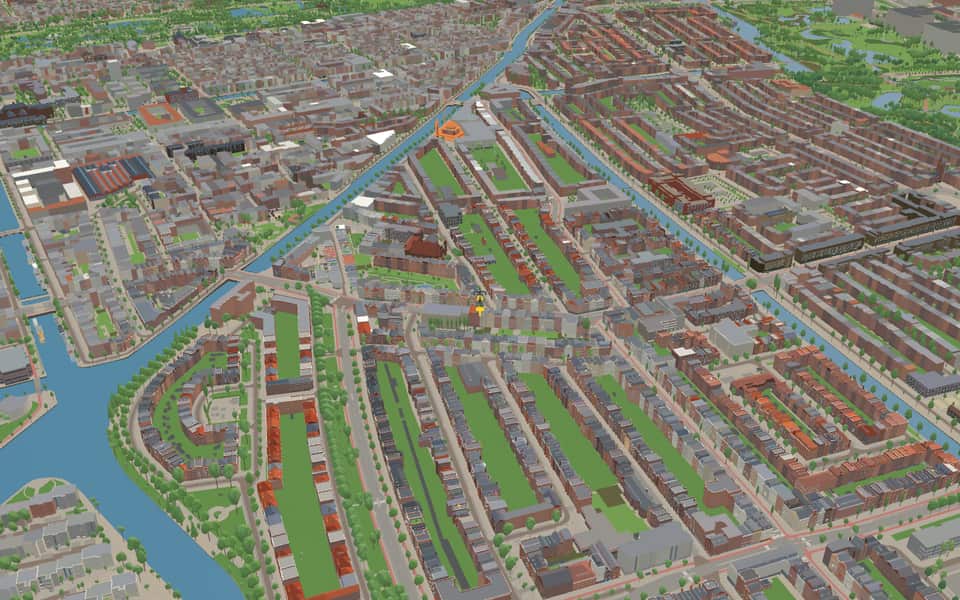
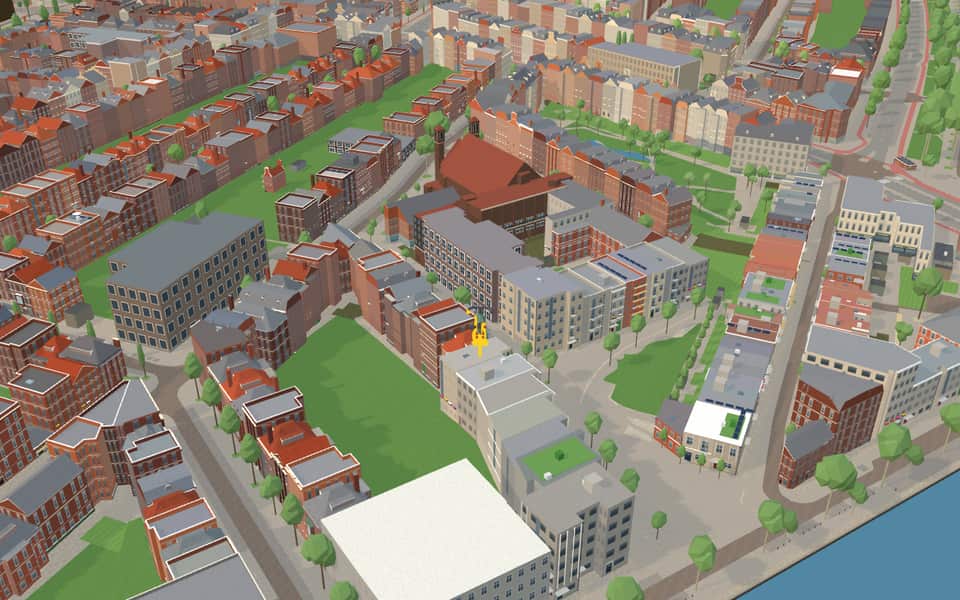
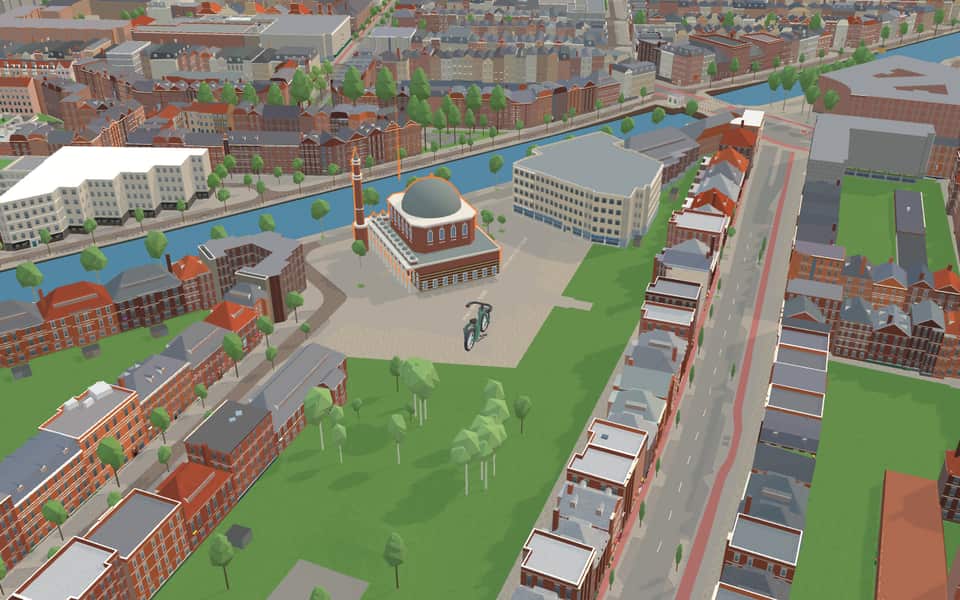
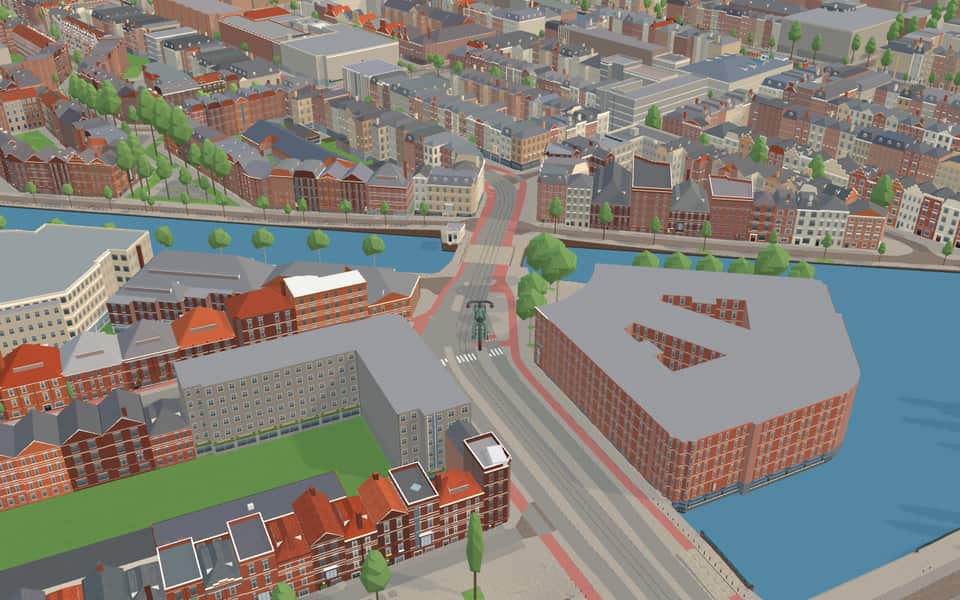
6 more photos of Chassébuurt


Built here
Buildings modelled one by one for the ride.
Chassékerk
- No picture yet
Het Sieraad (Postjesweg 1)
Westermoskee
Westermoskee
- No picture yet
Piri Reisplein 1-81 / Van Speijkstraat / Witte de Withstraat, De Baarsjes
2011 neoclassical pastiche housing round the Piri Reisplein square in red-brown brick with white cornices, storey bands and frames, cast-iron balconies, a domed pedimented corner pavilion and a colonnade, shops, the Hotel Not Hotel arch and a garage gateway on the ground (kit batch 2005+, lane kit-batch-2005-20261121)
- No picture yet
Van Kinsbergenstraat 54-156 / Witte de Withplein / Admiralengracht, Kinkerbuurt
2011 housing block in dark red-purple brick with regular white-framed French windows, a continuous brick balcony parapet over the ground storey, stacked deep cantilever brick-parapet balconies at the Admiralengracht corners and on Witte de Withplein, shops on the square (kit batch 2005+, lane kit-batch-2005-20261121)
Did you know
Trivia the ride can show you here.
- The Westermoskee here was designed by the French architects Marc and Nada Breitman. Wikipedia
- The Westermoskee was built between 2013 and 2015. Wikipedia
- Most of the Chassébuurt was built by partnerships of private builders who built homes to let. Wikipedia (translated from Dutch)
- Hildo Krop's sculptures on the Jan van Galenbrug include two sea lions with a ball and Jonah in the whale. Wikipedia (translated from Dutch)
- The Admiralengracht was named in 1924 after Dutch and Zeeland admirals. Wikipedia (translated from Dutch)
- WestermoskeeConstruction began in 2013 and finished two years later in 2015. en.wikipedia.org
- WestermoskeeThe mosque held its unofficial opening ceremony on April 1, 2016. en.wikipedia.org
- WesterwijkThe Reformed Petrus Church in Sloterdijk commissioned this project as their client. nl.wikipedia.org
- De KrommertA tram bridge over the ditch, numbered 249, was constructed in 1904. nl.wikipedia.org
- De KrommertTwo road segments meet at nearly a right angle to guide trams toward Sloterdijk. nl.wikipedia.org
- De KrommertThe nearby Krommertstraat honors a ditch that was dammed in 1931. nl.wikipedia.org
- GroentepraambrugPiet Kramer designed this narrow Amsterdam School bridge using brick, natural stone, and wrought iron balustrades. nl.wikipedia.org
- Jan van GalenbrugPiet Kramer originally designed a fixed bridge before converting it into the current bascule structure in 1936. nl.wikipedia.org
- Jan van GalenbrugCity sculptor Hildo Krop created most of the bridge's sculptures, including sea lions and a figure of Jonas in a whale. nl.wikipedia.org
15 more facts
- KinkerbrugRoad traffic was originally blocked by heavy iron doors that were removed around 1970 when barricades appeared. nl.wikipedia.org
- AdmiralengrachtAdmiralengracht honors Dutch and Zeelandish admirals from the 16th to 19th centuries. nl.wikipedia.org
- AdmiralengrachtThree bridges crossing this canal were built in the distinctive Amsterdam School style. nl.wikipedia.org
- KostverlorenvaartThe name Kostverlorenvaart (Lost Cost) arose because the sluice gates became unusable, wasting money. nl.wikipedia.org
- KostverlorenvaartAmsterdam fiercely opposed a 1413 plan to dig locks that might let enemies flood the city. nl.wikipedia.org
- KostverlorenvaartA turnaround path called an overtoom was laid on a dam in 1515 to allow small ships to pass. nl.wikipedia.org
- PostjesweteringIn 1954, the canal was raised from polder level to city center height after connecting to the Kostverlorenvaart. nl.wikipedia.org
- PostjesweteringAmsterdam's thousandth bridge, installed in 1973, spans this waterway near Rembrandtpark. nl.wikipedia.org
- Westelijk MarktkanaalThe canal opened in 1934 specifically to supply the Central Market Halls. nl.wikipedia.org
- Westelijk MarktkanaalUnlike the Lost Fleet, this waterway is not a continuous route. nl.wikipedia.org
- Westelijk MarktkanaalA bascule bridge named Jan van Galen Bridge crosses the canal here. nl.wikipedia.org
- Jan van GalenstraatA viaduct with ramps opened for northbound traffic in 1969 and southbound traffic in 1972. nl.wikipedia.org
- Jan van GalenstraatTram line 13 has been running through this street since 1989 between Jan Tooropstraat and the subway station. nl.wikipedia.org
- Van KinsbergenstraatVandals threw bricks and bicycles at houses here in August 2003 following riots on Mercatorplein. nl.wikipedia.org
- Van KinsbergenstraatAt the Van Speijkstraat intersection, pavement art displays symbols for neighborhood agreements like talking quietly. nl.wikipedia.org
Names on the map
Where the canal, bridge and street names come from.
Canals and water
- AdmiralengrachtA collective name for the admirals from Holland and Zeeland after whom the streets in the surrounding neighbourhood are named.
- KostverlorenvaartAfter the Kostverlorenwetering, dug in 1413 to give a shorter waterway to the Haarlem and Leiden lakes. According to some, the name Kostverloren (cost lost) comes from the heavy legal costs of this channel, which was a bone of contention between Amsterdam and Haarlem until 1609. The name Kostverloren occurs in several places in the Netherlands.
- PostjesweteringAfter the former Postjeswetering. A postje is a small freshwater fish.
- Westelijk MarktkanaalBrought into use in 1934 for carrying goods to and from the Central Market Halls.
Bridges
- GroentepraambrugThe name of this bridge recalls the time when many vegetable barges sailed from the west via the Admiralengrachten and the Kostverlorenkade to the Marnixstraat, where the vegetables were traded. Pramen are low little boats that can easily pass through polder ditches and under footbridges.Bridge 129: a steel bridge for pedestrians, dated 1927 in the city's bridge register.
- Jan van GalenbrugBridge 382: a movable steel bridge.
- KinkerbrugThis bascule bridge is named after Johannes Kinker (1764-1845), poet and lawyer in Amsterdam and The Hague, who later became a professor at Liège.Bridge 266: a movable steel bridge.
Streets
- Admiraal De RuijterwegMichiel Adriaansz. de Ruyter (1607-1676), the renowned admiral of Holland and West Friesland. He was born in Vlissingen. In Amsterdam he lived on what is now the Prins Hendrikkade.
- AdmiralengrachtA collective name for the admirals from Holland and Zeeland after whom the streets in the surrounding neighbourhood are named.
- Adriaan van BergenstraatThe Brabant peat skipper who in 1590 smuggled soldiers of the Dutch Republic (geuzen) into Breda in his peat boat.
- BaarsjeswegThe former inn 'De Drie Baarsjes' (The Three Little Perches), which at the time stood on the Kostverlorenvaart.
- BestevâerstraatAn honorary name given by sailors to Maarten Harpertsz. Tromp, and later to Michiel Adriaansz. de Ruyter. It literally means 'best father'. The street was originally named Wilhelminastraat by the municipality of Sloten (Sloten council decision of 28 June 1911).
- ChasséstraatDavid Henderikus Chassé (1765-1849), officer. A general at the Battle of Waterloo in 1815, he defended the Citadel of Antwerp in 1832. When it was laid out, the street was named Van Rijnstraat (council decision of Sloten, 20 July 1910).
- Cornelis DirkszstraatBurgomaster of Monnickendam, later admiral of Noord-Holland (1542-1583). One of the leaders of the Sea Beggars (watergeuzen), he defeated the Spanish on the Zuiderzee in 1573.
- Filips van AlmondestraatNaval hero (1646-1711), admiral in the Nine Years' War against France of 1688 to 1697.
- GeuzenkadeAt first meant as a term of abuse (geuzen: beggars), but taken as a title of honour by the Confederated Nobles (verbonden edelen) in the fight against Spain. Later the fighting name of all opponents of Spain in the Eighty Years' War. The Korte Geuzenstraat was earlier part of the Geuzenstraat.
- GeuzenstraatAt first meant as a term of abuse (geuzen: beggars), but taken as a title of honour by the Confederated Nobles (verbonden edelen) in the fight against Spain. Later the fighting name of all opponents of Spain in the Eighty Years' War. The Korte Geuzenstraat was earlier part of the Geuzenstraat.
- Jacob van Wassenaar ObdamstraatJacob Baron van Wassenaer, Lord of Obdam (1610-1665), Dutch lieutenant-admiral, who was blown up with his ship at the Battle of Lowestoft in the Second Anglo-Dutch War.
- Jan EvertsenstraatJohan Evertsen (1600-1666), of a Zeeland family of naval heroes. As admiral he took part in several naval battles, including the Battle of the Downs (1639). He was killed in the Second Anglo-Dutch War.
22 more streets with a story
- Jan van GalenstraatFleet commander (1604-1653), killed in the Battle of Livorno against the English.
- Jan van RiebeekstraatJan Anthonie van Riebeeck or Riebeek (1618-1708), who in 1652, in the service of the Dutch East India Company, founded the Cape Colony at the Cape of Good Hope.
- Joos de MoorstraatVice-admiral of Zeeland (1548-1618), known from the Eighty Years' War, who fought the Dunkirk privateers.
- Korte GeuzenstraatAt first meant as a term of abuse (geuzen: beggars), but taken as a title of honour by the Confederated Nobles (verbonden edelen) in the fight against Spain. Later the fighting name of all opponents of Spain in the Eighty Years' War. The Korte Geuzenstraat was earlier part of the Geuzenstraat.
- KortenaerstraatEgbert M. Kortenaer, lieutenant-admiral, who took part in the naval battles of Ter Heijde (1653) and the Sound (1658). He was killed in 1665 in the Battle of Lowestoft against the English.
- KrommertstraatThe winding little canal the Krommert, already partly filled in before 1930. The rest was filled in in the 1950s.
- Lodewijk BoisotstraatAdmiral of Zeeland (1530-1576) under William of Orange, who in 1574 relieved Leiden from the Spanish siege. He drowned trying to relieve Zierikzee.
- LumeijstraatWillem van Lumey (1542-1576), leader of the Sea Beggars before Den Briel in 1572. William of Orange then appointed him his lieutenant and governor of Holland, but he was finally dismissed for his cruelties. The municipality of Sloten named the street Emmastraat (council decision of Sloten, 28 June 1911), but this and other names were changed after the annexation of 1921 because they already existed elsewhere in Amsterdam.
- Maarten Harpertszoon TrompstraatDutch admiral (1597-1653), who defeated the Spanish fleet at the Downs in 1639. He was killed fighting the English in the naval battle of Ter Heijde.
- Pieter van der DoesstraatCommander of the Holland fleet in the struggle against the Spanish (1562-1599).
- Piri ReispleinHadji Muhiddin Piri Ibn Hadji Mehmed, better known as Piri Reis ('Captain Piri'), Ottoman seafarer, navigator and cartographer of the fifteenth and sixteenth centuries, maker of the Piri Reis map, a detailed world map that appeared in 1513.
- PostjeswegAfter the former Postjeswetering. A postje is a small freshwater fish.
- Reinier ClaeszenpleinDutch vice-admiral, who in 1606 was attacked by the Spanish fleet off Cape St Vincent (Portugal) and blew up his ship rather than surrender.
- Reinier ClaeszenstraatDutch vice-admiral, who in 1606 was attacked by the Spanish fleet off Cape St Vincent (Portugal) and blew up his ship rather than surrender.
- SlatuinenwegThis is what remains of the former Slatuinenpad, which until 1927 ran from the Baarsjesweg to the Haarlemmerweg past market gardens (slatuinen, where lettuce and vegetables were grown). It was a favourite walk for Amsterdammers.
- Van BrakelstraatJan van Brakel (1618-1690), naval officer under Admiral De Ruyter (the Four Days' Battle, the raid on Chatham).
- Van KinsbergenstraatJan Hendrik van Kinsbergen (1735-1819), admiral at the Battle of the Dogger Bank in 1781, who reorganised the navy.
- Van SpeijkstraatJan Carel Josephus van Speijk (1802-1831), an Amsterdam orphan boy who became a naval officer. During the Belgian revolt in 1831 he blew up his ship near Antwerp rather than surrender.
- WiegbrugThis bascule bridge is named after the type of bridge it originally was: a wiegbrug (cradle bridge) is a rolling bascule bridge.
- Willem de ZwijgerlaanThe nickname (William the Silent) of Prince William of Orange (1533-1584), also called 'the Father of the Fatherland', son of William of Nassau and Juliana of Stolberg. Because he inherited the principality of Orange, he is the founder of the House of Orange-Nassau.
- Witte de WithpleinWitte Cornelisz de With (1599-1658), vice-admiral of Holland and West Friesland, who fought under Tromp at the Downs and at Terheide, among other battles, and was killed in the Battle of the Sound against the Swedes.
- Witte de WithstraatWitte Cornelisz de With (1599-1658), vice-admiral of Holland and West Friesland, who fought under Tromp at the Downs and at Terheide, among other battles, and was killed in the Battle of the Sound against the Swedes.
1 other street without a recorded story
Kees Fensplein